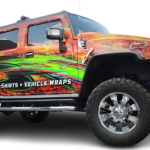
A vehicle wrap should usually be planned with the final upfit in mind, even if the graphics are not installed until the equipment configuration is complete. The earlier the wrap designer understands what racks, toolboxes, service bodies, lighting, storage, or other equipment will be added, the easier it is to develop graphics around the vehicle that will actually enter service.
That distinction between planning and installation matters.
A commercial vehicle may leave the dealership looking very different from the version that eventually reaches customers or job sites. Contractors, service businesses, delivery companies, mobile technicians, and other operators often add equipment before putting a vehicle into daily use.
Those changes can affect both the usable graphic area and the sequence of a wrap project.
What Does Upfitting Mean for a Commercial Vehicle?
Upfitting is the process of modifying a vehicle so it can perform a specific job.
The exact equipment varies by business and vehicle type. A work truck might receive a service body or toolbox system. A van could be fitted with roof racks, shelving, exterior ladder systems, or additional lighting. Other commercial vehicles may receive liftgates, utility compartments, steps, protective equipment, or specialized hardware.
Some additions remain primarily inside the vehicle.
Others significantly change the exterior.
Exterior changes are the ones that matter most for vehicle wraps because they can cover body panels, divide surfaces, affect sightlines, or introduce moving parts that the graphics need to accommodate.
The more extensive the upfit, the more important it becomes to consider the final configuration during wrap planning.
Should the Wrap Designer Be Involved Before the Upfit Is Finished?
In many cases, yes.
That does not necessarily mean the vehicle should be wrapped before the equipment is installed. It means the graphics provider should know what the completed vehicle is expected to look like.
Early information can include:
- Planned exterior racks
- Service or utility bodies
- Toolboxes
- Additional compartments
- Liftgates
- Steps
- Exterior lighting
- Equipment doors
- Mounted accessories
- Other permanent modifications
This allows the design to anticipate where major visual interruptions will occur.
If the upfit is already complete, the process is more straightforward because the final surfaces can be evaluated directly.
If it is still being planned, drawings, equipment specifications, reference images, and accurate project details can help establish what areas of the vehicle will remain available.
Why Not Design the Wrap Around the Stock Vehicle?
Because the stock vehicle may not be the vehicle that ultimately carries the graphics.
Imagine a business purchases a cargo van and begins developing its branding immediately. The first wrap concept places a large logo across the upper side panel and supporting information toward the rear.
Later, the van receives an exterior ladder rack, access equipment, and a mounted component that partially blocks the logo from common viewing angles.
Nothing was technically wrong with the original design. It was simply based on the wrong version of the vehicle.
The same thing can happen with trucks.
A graphic designed for a standard pickup bed may no longer fit once that bed is replaced with a utility body containing several compartment doors.
Planning around the expected upfit helps prevent the graphics from being treated as a separate project with no relationship to the working vehicle.
Does Upfitting Always Need to Be Completed Before Wrap Installation?
Not every project follows the same sequence, but permanent exterior modifications generally need to be considered before final installation decisions are made.
A component installed after the wrap could require drilling, bolting, cutting, or accessing wrapped areas. It may also cover portions of the finished graphics.
That is why sequencing should be discussed before production rather than assumed.
The exact order depends on what is being added.
Interior shelving, for example, may have little effect on exterior graphics. A large service body changes the exterior completely.
The useful question is not simply, “Is the vehicle being upfitted?”
It is, “Which parts of the upfit change the surfaces involved in the wrap?”
How Can a Service Body Change the Wrap Plan?
A service body is one of the clearest examples of why wrap planning and upfitting need to be coordinated.
Instead of the relatively broad side of a standard pickup bed, a service body may contain:
- Multiple compartment doors
- Handles
- Locks
- Hinges
- Seams
- Steps
- Utility access points
- Exterior hardware
The total surface area may still be substantial, but it is divided differently.
A large logo that would have worked across a standard bed may need to move to the cab, shift in scale, or be redesigned around the compartments.
Likewise, detailed vehicle graphics may need to be simplified in areas that open frequently.
The company’s branding can remain consistent. The physical arrangement changes.
What About Ladder Racks and Roof Equipment?
Racks change the silhouette of the vehicle and can affect visibility from side and angled viewpoints.
A graphic that appears unobstructed when looking directly at a design template may sit behind a rack support once the vehicle is viewed in person.
This is particularly relevant when a company name or logo is positioned high on a truck or van.
Even when the rack itself does not touch the wrapped body panel, it can still visually interfere with the graphics.
Professional planning should therefore account not only for where equipment is physically attached, but also for how it changes the viewing environment around the vehicle.
That is one reason final vehicle photos can be more useful than relying solely on factory outlines.
Should Branding Be Added Before the Business Knows Its Equipment Layout?
Usually, the clearer the equipment plan, the better.
Commercial vehicles are working assets. Their branding should fit their function.
If a company knows that a van will eventually carry ladders, a truck will receive side compartments, or a rear lift will be added, those changes should be communicated before final graphics are approved.
Otherwise, a later modification can force the business to make compromises.
Important contact information may need to move. A logo could be partially covered. A graphic composition may stop making sense once new equipment divides the surface.
For businesses considering a vehicle vinyl wrap for a commercial vehicle in Surprise, sharing the intended upfit configuration early can help ensure the artwork is developed around the vehicle’s actual working form rather than a stock version that may soon change.
Can Wrap Planning Begin While the Upfit Is Still Being Designed?
Yes, as long as enough reliable information is available.
There can be value in allowing both projects to inform each other.
For example, if a business knows where large exterior storage compartments will be positioned, the graphics can reserve stronger branding areas elsewhere. If a rack support is expected to run through a particular section, critical text can be kept away from that area.
This does not mean the wrap designer determines how the vehicle should be mechanically upfitted.
Those decisions belong to the appropriate vehicle and equipment professionals.
The benefit comes from coordination.
The graphics provider can understand the exterior constraints while the business avoids approving artwork that depends on surfaces that will not remain usable.
Which Parts of the Design Are Most Sensitive to Upfit Changes?
Text and logos are usually less forgiving than broad background graphics.
A color field can continue behind or around some types of hardware without becoming confusing.
A company name cannot lose several letters and still communicate effectively.
Similarly, a phone number or web address should not depend on an area that may later be covered by a toolbox, rack support, or equipment door.
The most sensitive elements generally include:
Company Name and Logo
These establish the primary identity of the vehicle and should remain recognizable.
Phone Numbers and Websites
Every character matters, so even a relatively small obstruction can create confusion.
Service Descriptions
Longer text requires enough uninterrupted space to remain readable.
Detailed Images
Photographs or illustrations can lose clarity if important parts of the subject are covered or divided.
Supporting backgrounds and decorative elements generally provide more flexibility.
What Happens When the Upfit Changes Later?
Commercial vehicles evolve.
A business may add another toolbox, replace a rack, install different equipment, or change how the vehicle is used.
Some changes have little impact.
Others alter the graphic layout substantially.
When major exterior modifications are anticipated, it helps to think about whether the wrap design has enough flexibility to accommodate them.
For example, keeping critical branding away from areas likely to receive future equipment can reduce the chance that a later addition immediately compromises the graphics.
No design can predict every future modification.
The objective is simply to make decisions based on what the business already expects to change.
Can Commercial Vehicle Wraps Be Standardized Across Upfitted Fleets?
They can share a strong visual system even when individual vehicles have different equipment.
This is an important distinction.
A fleet may include:
- Standard vans
- Vans with roof racks
- Pickup trucks
- Utility-body trucks
- Passenger vehicles
- Larger commercial units
Trying to place the same graphic in the exact same position on each one can produce inconsistent results because the available surfaces differ.
A better approach is to standardize the brand elements.
Colors, typography, logo treatment, graphic style, and message hierarchy can stay consistent while placement adapts to each upfit.
That allows commercial vehicle wraps to look related without forcing one vehicle’s layout onto another.
Should the Wrap Be Installed Before Equipment That Touches the Body?
This depends on the equipment and installation method, so it should be addressed as a project-specific coordination question rather than a universal rule.
Some components may require direct access to the body.
Others may mount in ways that do not materially affect wrapped surfaces.
The graphics provider and upfit professionals need accurate information about what work remains.
Installing graphics without knowing that another contractor will later drill, cut, remove panels, or mount equipment in the same area can create avoidable problems.
The safest planning principle is simple: identify the work that changes exterior surfaces before assuming the wrap is the final step.
How Does Upfitting Affect Vehicle Wrap Maintenance?
Exterior equipment can change where dirt, water, debris, or physical contact occur around the vehicle.
For example, areas near ladder racks, utility compartments, frequently used handles, and work equipment may experience different day-to-day conditions from broad passenger-car panels.
That does not automatically mean a different wrap system is required.
It means the vehicle’s intended use should be part of the project discussion.
A commercial vehicle used on job sites has a different operating environment from a passenger car used primarily on paved city streets.
Those differences are relevant when setting realistic expectations for any exterior graphic application.
Is It Better to Wrap a New Commercial Vehicle Immediately?
Only if the working configuration is sufficiently settled.
There is often understandable pressure to get a newly purchased commercial vehicle branded and into service quickly.
However, rushing the graphics before exterior equipment decisions are complete can create rework later.
A short period of coordination can be more useful than finalizing a design around a vehicle that will look different after the upfit.
The important milestone is not simply when the vehicle is purchased.
It is when there is enough certainty about the exterior configuration to design accurately.
What Information Should Be Ready Before Wrap Planning?
A useful project discussion generally starts with accurate vehicle information.
That may include the year, make, model, body configuration, current photos, planned exterior equipment, and expected use.
If the upfit has not yet been completed, relevant specifications or reference images can clarify what is coming.
The purpose is not to make the business manage the technical design process itself.
It is to make sure the graphics professional is working with the correct vehicle information.
That becomes especially important with custom vehicle wraps, where artwork is being developed around the specific shape and use of the vehicle rather than applied as a generic sign.
Why Sequence Matters More Than a Simple “Before or After” Rule
The best answer is not always “wrap before upfitting” or “wrap after upfitting.”
The better principle is:
Plan the branding early enough to account for the upfit, but finalize production and installation around the actual exterior configuration.
That approach allows the design and equipment decisions to coexist.
It also avoids two common problems: developing graphics without knowing what parts of the vehicle will remain visible, or waiting until every decision is finished before thinking about branding at all.
The exact sequence can vary by project.
What matters is communication between the business, the upfit professionals, and the graphics provider.
A Wrap Should Be Designed for the Working Vehicle
Commercial vehicles rarely stay in factory condition when they have a specific job to perform.
Racks, service bodies, storage systems, lifts, steps, lighting, and other equipment can change the surfaces available for vehicle wraps and affect how the branding is seen from different directions.
Planning the graphics with those changes in mind allows logos, text, and supporting visuals to fit the vehicle that will actually enter service.
For businesses in Surprise and other growing Arizona communities, that means thinking about branding as part of the vehicle-build process rather than treating it as an unrelated finishing step.
When the final equipment configuration and the graphic layout are considered together, the vehicle can perform its job without forcing the branding to compete with the equipment that makes that job possible.