I have enough verified detail. The keyword “Gutter Installation” directly matches the business’s primary listed service (seamless gutter installation). I’ll use NOAA as a credible external reference for rainfall-based sizing.# Key Factors That Determine a Successful Gutter Installation
• A successful gutter installation depends on correct sizing, proper slope, secure fastening, and downspout placement matched to local rainfall patterns.
• Material choice, hanger spacing, and seamless fabrication affect how long a system resists leaks and sagging.
• Homeowners in Guilford, CT should weigh roofline shape, tree coverage, and coastal moisture exposure before choosing a system.
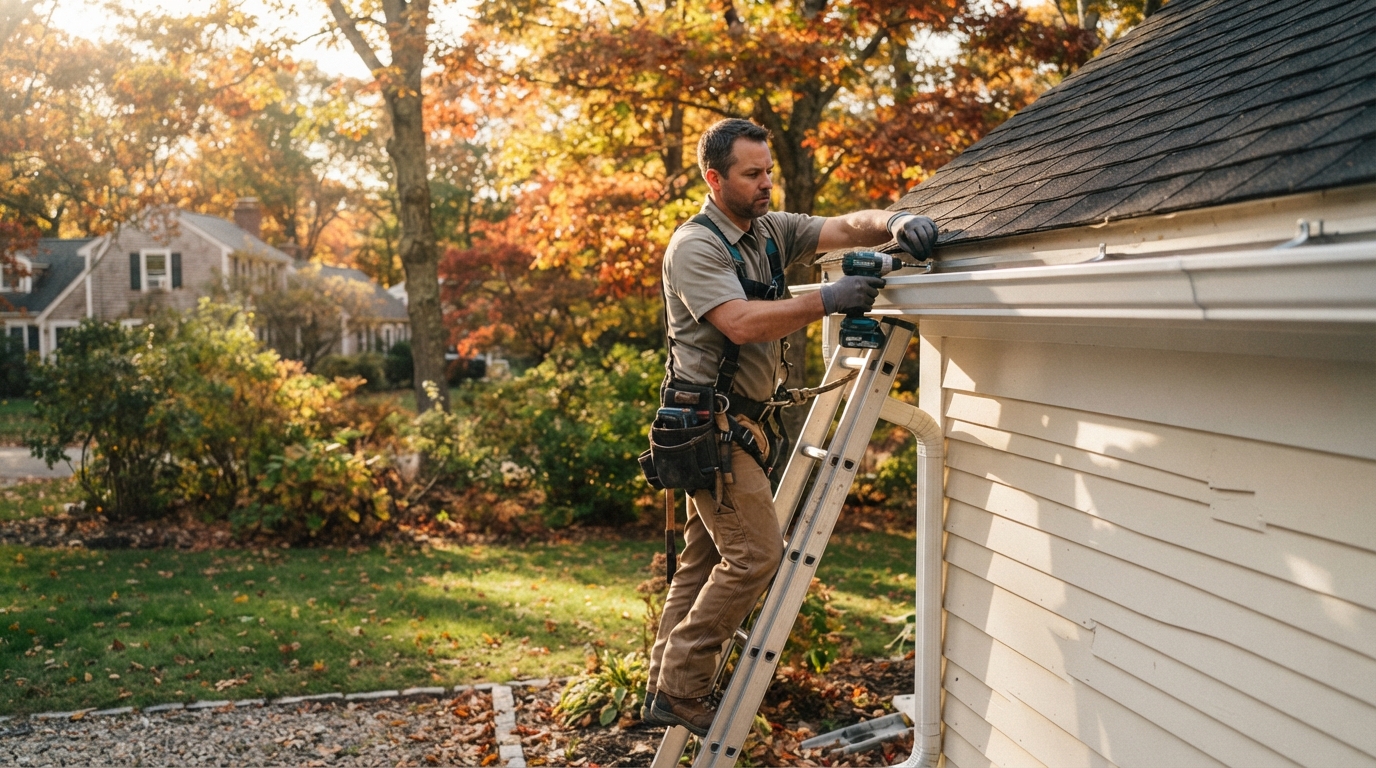
A properly executed Gutter Installation relies on accurate measurements, correct material selection, and attention to slope and drainage capacity rather than a one-size-fits-all approach. These factors determine whether a system channels water away from a foundation for years or develops leaks and sagging within a single season.
Seamless aluminum, copper, and steel gutters are fabricated on-site to match a home’s exact dimensions, which reduces the seam-related leaks common in sectional systems. Town & Country Seamless Gutters, based in Durham, CT, lists custom-cut seamless gutter installation among its primary services, alongside gutter guards and repair work.
Sizing and Slope Fundamentals
Gutter performance starts with matching trough size to the roof area it drains. Residential setups commonly pair 5-inch K-style gutters with 2×3-inch downspouts, while larger roofs or higher rainfall totals often call for 6-inch gutters paired with 3×4-inch downspouts.
Proper slope is equally important. Industry guidance recommends roughly 1/16 inch of fall per foot of gutter run toward each outlet, since a level or improperly pitched trough allows water to pool and accelerates corrosion.
• Undersized downspouts create bottlenecks even when the gutter itself is correctly sized
• Longer gutter runs typically need an additional downspout rather than one oversized outlet
• Local rainfall intensity data, such as that published through the NOAA Precipitation Frequency Data Server , informs appropriate capacity planning for a given region
Downspout Placement and Fastening
Downspout count and position affect drainage as much as gutter size itself. A widely used planning target is one downspout for every 30 to 40 feet of gutter run, with closer spacing in areas prone to heavy or sudden rainfall.
|
Gutter Size |
Typical Downspout |
Approx. Roof Area Served |
|
5-inch K-style |
2×3 inch |
Up to about 600 sq ft per outlet |
|
6-inch K-style |
3×4 inch |
Up to about 1,200 sq ft per outlet |
|
Half-round |
3 or 4 inch round |
Varies with pitch and length |
Hanger spacing also matters for long-term stability. Gutters secured with hidden hangers spaced too far apart are more likely to sag under the weight of standing water, wet leaves, or ice.
Local Conditions That Affect Installation in Guilford, CT
Coastal towns face installation variables that inland properties do not encounter as often. Salt air exposure, older rooflines on historic homes, and dense tree canopy near the shoreline all influence material choice and maintenance needs.
• Homes near the shoreline benefit from corrosion-resistant materials such as aluminum or copper
• Properties with heavy tree coverage often need gutter guards to limit clogging between cleanings
• Steeply pitched or complex rooflines may require additional downspouts beyond the standard spacing guideline
Based in Durham, CT, Town & Country Seamless Gutters extends seamless gutter installation and related services to homeowners throughout Guilford, CT. Readers can review published service details directly through Town & Country Seamless Gutters, which outlines installation, repair, and gutter guard offerings.
Frequently Asked Questions
What is the biggest factor in whether a gutter installation lasts? Correct slope and downspout capacity tend to matter more than material alone, since standing water and overflow cause most premature failures regardless of the metal used.
How many downspouts does a typical home need? Most residential systems use one downspout per 30 to 40 feet of gutter run, though steep roofs or heavy rainfall areas often require tighter spacing.
Do seamless gutters perform differently than sectional gutters? Seamless systems are fabricated to the home’s exact measurements, which eliminates the horizontal seams where sectional gutters commonly develop leaks over time.
Does tree coverage change what type of installation a home needs? Properties with significant tree canopy often benefit from gutter guards or more frequent maintenance scheduling to prevent debris from blocking flow during storms.
Next Steps for Homeowners
Readers evaluating gutter options can review published service and contact information before scheduling an assessment. For published location and contact details, Visit Town & Country Seamless Gutters website.