Quick summary:
• A malfunctioning oven often shows clear warning signs before it fails completely — catching them early saves money and keeps your kitchen safe.
• Professional diagnosis is the right call for heating failures, unusual smells, or unresponsive controls.
• Local residential appliance repair is available in the Tequesta area for both gas and electric ovens.
When your oven stops heating correctly or behaves unpredictably, the problem rarely fixes itself. Ovens rarely fail without warning — in many cases, the appliance begins showing small signs of trouble days or weeks before it stops working completely. Knowing what to look for helps you act before a minor issue becomes a full breakdown.
If you are searching for Ovens Repair In Tequesta FL, the key is identifying the right symptoms early and connecting with a qualified technician who services your area. All American Appliance, Inc. is an appliance repair service operating from Tequesta to Lake Worth, making it a practical option for homeowners across this stretch of Palm Beach County.
Warning Signs That Your Oven Needs Professional Attention
Watch for uneven cooking, a failure to heat, slow preheating, unresponsive controls, or any unusual smells or sounds. These symptoms point to specific component failures that a technician can diagnose accurately.
Common oven problems and their likely causes:
| Symptom | Likely Cause | DIY-Safe? |
| Oven won’t heat or heats unevenly | Failed heating element or igniter | No |
| Wrong or inconsistent temperatures | Faulty thermostat or temperature sensor | No |
| Slow to preheat | Worn element, sensor, or igniter | No |
| Unresponsive controls or display | Electronic control board failure | No |
A weak igniter, failing heating element, worn thermostat, or damaged sensor may start as a small performance issue and eventually lead to a complete breakdown. Addressing these early avoids the higher cost of emergency service.
Some symptoms require stopping use of the oven immediately. A gas smell, a burning odor, sparks, or a door that won’t seal are safety risks, and the oven should not be used until a technician inspects it. The U.S. Consumer Product Safety Commission’s range and oven safety guidance reinforces that kitchen appliance hazards deserve prompt attention rather than a wait-and-see approach.
What a Technician Checks During an Oven Repair
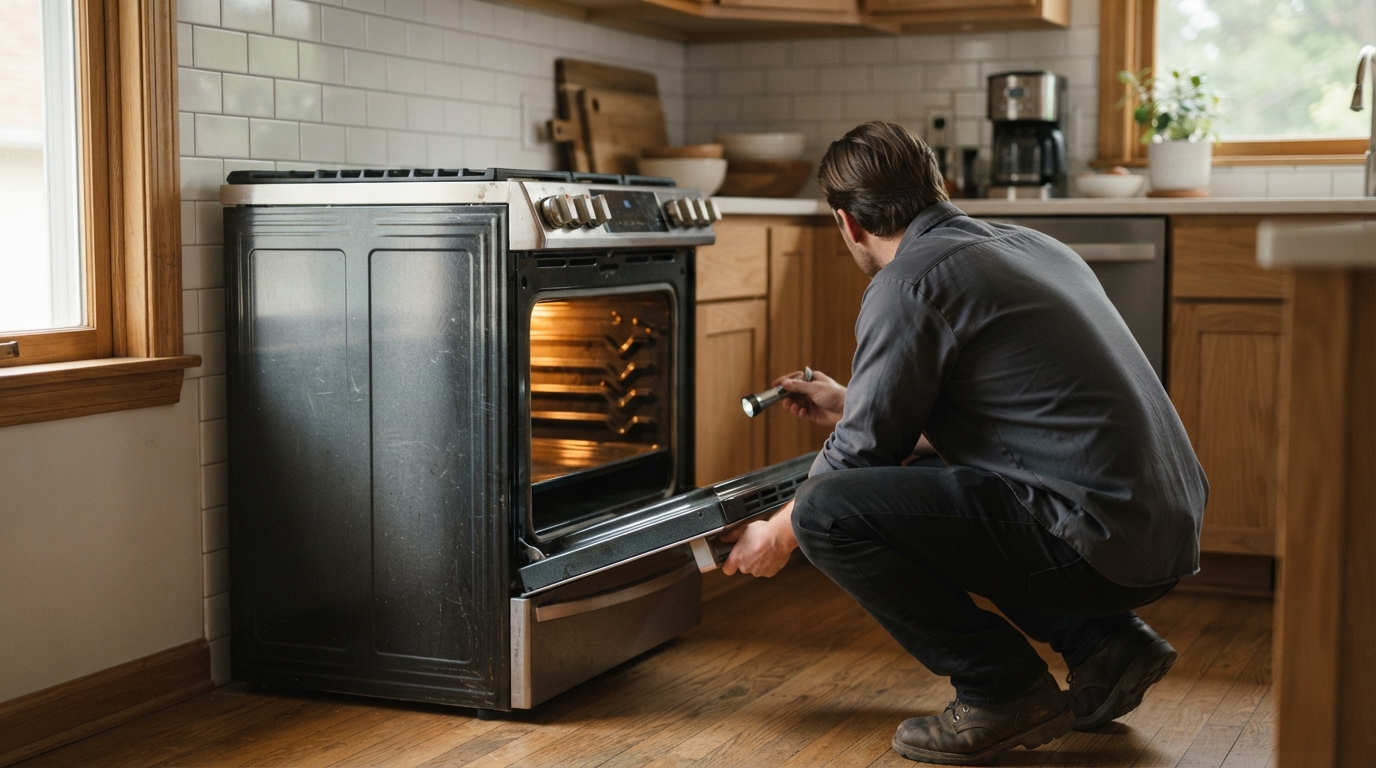
An oven contains electrical, heating, gas, electronic, and mechanical components that work together. A problem with one component can sometimes produce symptoms that look like another issue. Professional diagnosis helps identify the actual source of the failure.
A qualified technician typically inspects:
• The heating element or gas igniter for visible damage or failure to glow
• The temperature sensor and thermostat calibration
• The control board and wiring connections
• The door gasket and hinge condition
• Error codes stored in the oven’s memory
Instead of replacing parts unnecessarily, a technician can test relevant components and determine the appropriate repair. This targeted approach keeps the repair cost proportional to the actual problem.
Good repair service does not end when the technician replaces a part. A reputable provider should test the oven after repair and confirm that the problem has actually been resolved.
Repair vs. Replacement: Making the Right Call
Not every oven problem justifies a repair. Use these factors to guide the decision:
• Age of the appliance: If your oven is under about 10 years old and the repair is affordable, fixing it is usually the better value.
• Repair cost vs. replacement cost: A general rule is to avoid repairs that exceed 50 percent of the cost of a comparable new unit.
• Frequency of breakdowns: Some oven issues appear repeatedly, even after repairs, which signals that replacement may be more cost-effective long term.
• Parts availability: Older or discontinued models can face long lead times on replacement parts, which extends downtime.
Certified, fully insured technicians know how to check for related failures, verify proper function after the repair, and avoid the kind of shortcuts that lead to callbacks. Getting a professional assessment before committing to replacement often reveals that a targeted repair is the more economical path.
Frequently Asked Questions
How long does a typical oven repair take? Most standard repairs — such as replacing a heating element, igniter, or temperature sensor — are completed in a single visit once the correct part is on hand. More complex control board issues may require a follow-up appointment.
Is it safe to use my oven if it’s heating unevenly? Uneven heating is usually safe in the short term, but it signals a component problem that will worsen. If basic checks like resetting the breaker do not solve the problem, it is time to call a professional.
Do repair technicians work on both gas and electric ovens? Trained technicians handle a broad spectrum of appliance problems, including electrical failures, temperature irregularities, and mechanical breakdowns. Most qualified technicians service both gas and electric models.
What should I have ready before the technician arrives? Have the oven’s brand name, model number, and a clear description of the symptoms ready. Note when the problem started and whether any error codes appeared on the display.
Schedule Oven Repair Service in Tequesta
A malfunctioning oven disrupts daily routines quickly, and delaying service rarely makes the underlying problem cheaper to fix. All American Appliance Inc offers residential appliance repair in Tequesta, FL, serving homeowners who need reliable, in-home diagnosis and repair for both gas and electric ovens. To book a service visit, contact All American Appliance Inc directly and have your appliance details ready for a faster appointment.