Simply put:
- Minor electrical tasks like replacing a switch cover are generally safe for homeowners, but wiring, panel, and circuit work carry shock and fire risks.
- Older homes in Englewood, FL may have outdated wiring that is not visible without an inspection.
- Licensed electricians follow the National Electrical Code and local permitting rules that DIY work often misses.
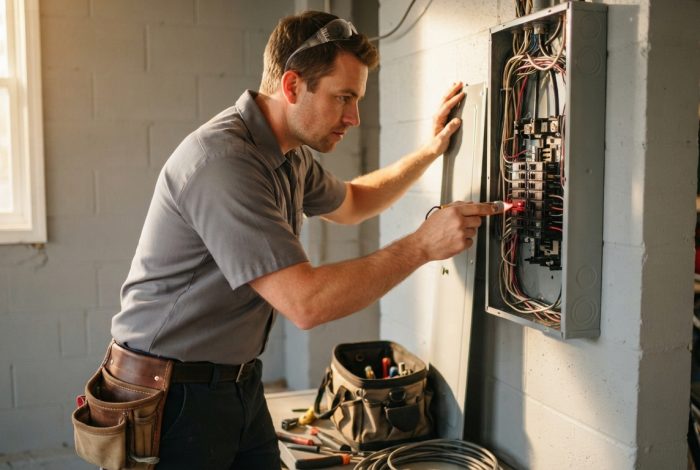
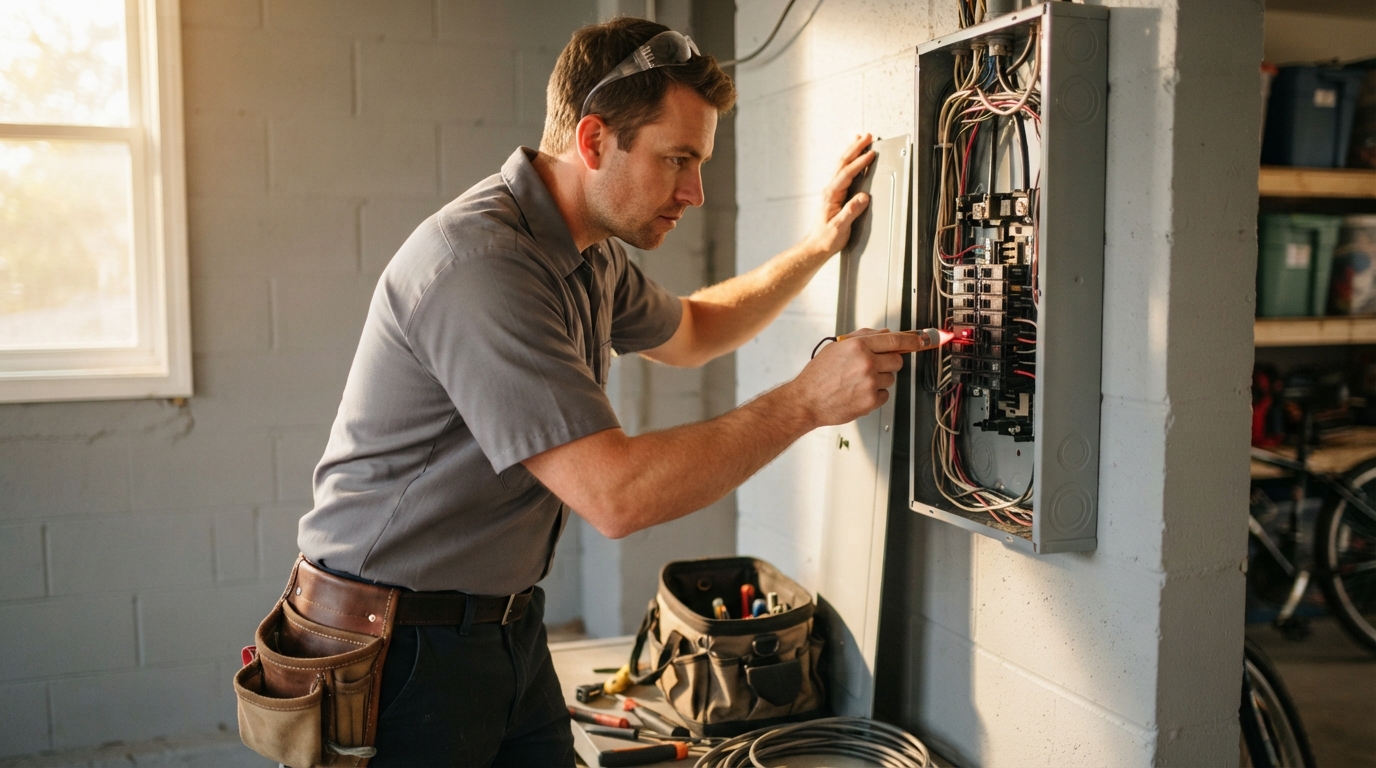
Deciding whether a project is safe for a homeowner to handle comes down to one question: does the task involve exposed wiring, a breaker panel, or a circuit that carries live current? If so, most safety authorities recommend professional Electrical Repairs in Englewood, FL, rather than a do-it-yourself approach.
Homeowners in Englewood, FL often face this decision after storm damage, a tripped breaker that will not reset, or an outlet that feels warm to the touch. These situations can look minor on the surface but often point to deeper wiring problems that are not visible without opening a panel or tracing a circuit.
Why Some Electrical Tasks Are Riskier Than They Appear
Electrical work differs from most home maintenance because mistakes are not always immediately obvious. A loose connection inside a wall can function normally for months before overheating.
- Faulty wiring is a leading cause of residential fires, according to safety data tracked by the U.S. Fire Administration.
- Breaker panels carry enough current to cause serious injury even when a home’s main switch is off, since some components remain energized.
- Outdated aluminum or cloth-insulated wiring, common in older housing stock, behaves differently than modern copper wiring and requires different handling.
Because these risks are not always visible, a task that looks simple, such as replacing an outlet, can expose a homeowner to a live circuit if the breaker was mislabeled or the wrong one was shut off.
Tasks Homeowners Can Reasonably Handle
Not every electrical project requires a licensed professional. Some low-voltage or no-wiring tasks are considered safe for most homeowners when basic precautions are followed.
- Replacing a lightbulb or switch plate cover after confirming the fixture is off.
- Resetting a tripped breaker once, to see if it holds (if it trips again, the circuit likely has a fault).
- Testing and resetting ground-fault circuit interrupter (GFCI) outlets, which are common in kitchens and bathrooms.
- Installing battery-powered smoke detectors or replacing their batteries.
Tasks that fall outside this list, including panel work, new circuit installation, or anything involving exposed wiring, generally call for licensed electrical help rather than a weekend project.
DIY vs Professional Electrical Work
| Factor | Homeowner DIY | Licensed Electrician |
| Scope | Low-voltage, no exposed wiring | Panels, circuits, rewiring |
| Code compliance | Often unverified | Follows National Electrical Code |
| Permitting | Rarely pulled | Typically required and filed |
| Risk level | Higher if circuit is misjudged | Reduced through training and testing equipment |
This comparison is not about skill level alone. It reflects the difference between tasks with a single clear outcome and tasks where an error can remain hidden inside a wall for months.
Local Considerations for Englewood, FL Homes
Coastal humidity and seasonal storms are relevant factors for anyone evaluating electrical systems in Englewood, FL. Salt air and moisture can accelerate corrosion in outdoor outlets, panel boxes, and connections exposed to the elements.
Homes built before updated code cycles may also have wiring configurations that no longer meet current safety standards, even if they have never caused a visible problem. A licensed inspection can identify these gaps before storm season or a renovation project forces the issue.
Frequently Asked Questions
Can I replace an outlet myself if the breaker is off? Confirming the breaker is off with a voltage tester first is important, since mislabeled panels are common and can leave a circuit live even when the switch appears off.
What are signs that wiring needs professional attention? Warm outlet covers, flickering lights unrelated to a bulb, a persistent burning smell, or breakers that trip repeatedly all indicate a problem that typically requires professional diagnosis.
Do electrical repairs usually require a permit? Many jurisdictions require permits for circuit changes or panel work; local building departments can confirm specific requirements for a given project.
Is it normal for an older home to need a rewiring evaluation? Homes with original wiring from several decades ago are often evaluated during a sale, renovation, or after storm damage to confirm the system still meets current safety expectations.
Business Information and Resource
Based in USA, Mike & Mike Services, Inc. serves customers across Englewood, FL.
Additional background on electrical safety practices and service considerations is available through Read More, which covers related topics for homeowners evaluating their options.