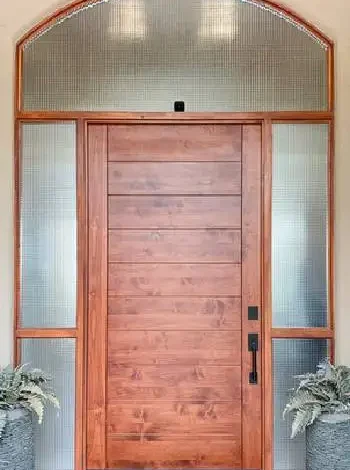
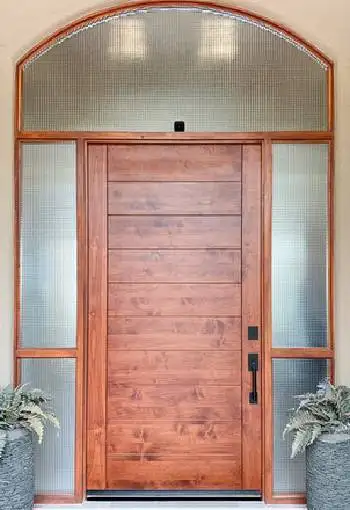
End grain is the exposed end of wood fibers, where moisture can enter and leave the material more readily than through its long-grain surfaces. On exterior wood doors, unprotected end grain can contribute to uneven moisture absorption, swelling, cracking, and deterioration, making proper sealing and construction essential considerations.
Homeowners often evaluate wood entry doors by examining their grain patterns, panel designs, and overall appearance. However, some of the most important details affecting long-term performance are found along the edges, joints, and other areas that receive less attention.
This is especially relevant in Phoenix, Arizona, where exterior doors can experience extended dry periods, intense sunlight, and occasional exposure to monsoon rainfall.
Understanding end grain helps homeowners ask more informed questions about handcrafted wood doors, identify vulnerable areas, and recognize when maintenance or professional evaluation may be needed.
What Is End Grain on a Wood Door?
End grain is the surface exposed when wood is cut across the direction of its fibers.
Unlike the long grain visible along the face of a board, end grain reveals the ends of the wood’s internal cellular structure.
Wood contains elongated cells that help transport water and nutrients while the tree is growing. After the wood is cut and dried, this cellular structure continues to influence how it absorbs and releases moisture.
Because many of these cells are exposed at the cut ends, moisture can move into end grain more readily than through the surrounding long-grain surfaces.
Where Is End Grain Found on Exterior Doors?
End grain may be present in several locations, depending on how a door is constructed.
Common areas include:
- The ends of vertical and horizontal wood components
- Certain exposed joints between rails and stiles
- The upper and lower edges of some solid wood components
- Cutouts and modifications that expose unfinished wood
- Decorative features incorporating cross-grain surfaces
Not every visible door edge is end grain.
For example, the long vertical edge of a stile generally follows the grain direction, while the ends of certain rails expose fibers cut across their length.
The exact locations depend on the design and internal construction of the door.
Why Does This Matter?
End grain and long grain do not respond identically to moisture.
A door component that is adequately protected on its broad faces may still absorb moisture through an exposed end.
This can create uneven moisture conditions within the wood.
Over time, repeated exposure may contribute to movement or deterioration, particularly where protective coatings have been compromised.
Why Does End Grain Absorb Moisture More Readily?
Wood is a hygroscopic material, meaning it exchanges moisture with the surrounding environment.
Its internal structure influences how quickly that exchange occurs.
The U.S. Department of Agriculture’s Forest Products Laboratory explains in its wood-finishing guidance that end grain absorbs moisture more rapidly than face grain and that protective finishes commonly experience early failure in these areas.
This behavior makes end-grain protection an important part of exterior wood finishing.
Moisture Movement Through Wood Fibers
The long-grain surfaces of wood expose the sides of its elongated cells.
End grain exposes their cut ends.
When moisture reaches these surfaces, the wood’s structure can allow more rapid absorption along the grain direction.
This distinction becomes particularly important when wood comes into contact with liquid water.
A brief rainstorm may not cause noticeable damage to a properly protected exterior door, but repeated moisture entry through vulnerable areas can create problems over time.
Uneven Moisture Absorption
When one portion of a wood component absorbs moisture more quickly than another, the material may develop different moisture levels across its structure.
These differences can contribute to uneven swelling.
As the material dries, it may contract again.
The resulting movement depends on wood species, grain orientation, construction, and environmental exposure.
An occasional minor change in fit does not necessarily indicate damage, but persistent movement or visible deterioration deserves investigation.
How Can Exposed End Grain Affect Door Durability?
Unprotected end grain can contribute to several problems when exterior wood components experience repeated moisture exposure.
The consequences vary according to the door’s construction, finish condition, and surrounding environment.
Swelling Near Vulnerable Areas
When wood absorbs moisture, it can expand across the grain.
If moisture enters primarily through a poorly protected section, localized movement may develop.
For example, a wood component near the bottom of an entrance could experience repeated moisture exposure if water collects around the threshold.
Over time, changes in that component’s dimensions may affect nearby joints or clearances.
However, swelling can also result from other conditions, including water intrusion through damaged joints or deteriorated glazing seals.
Checking and Surface Cracks
Checking refers to cracks that develop as wood responds to moisture changes and associated stresses.
Exposed end grain may become vulnerable when repeated wetting and drying cause uneven moisture conditions.
Small cracks can provide additional pathways for water.
Not every surface check represents serious structural damage, but cracks that grow, expose unprotected wood, or occur near important joints should be evaluated.
Deterioration of Protective Finishes
Protective finishes help moderate moisture exchange.
However, coating performance can vary across different wood surfaces.
End grain may require particular attention because it can absorb finishing materials differently from long-grain surfaces.
If protective coverage becomes inadequate, moisture may enter through these areas more readily.
Does Phoenix’s Desert Climate Eliminate End-Grain Moisture Problems?
No. A dry climate does not eliminate moisture-related concerns for exterior wood doors.
Although Phoenix experiences extended periods of low humidity, exterior entrances can still encounter rain, irrigation overspray, condensation, and other localized sources of moisture.
Seasonal environmental changes also influence how wood releases and absorbs moisture.
Dry Conditions and Wood Movement
During dry weather, wood may gradually release moisture.
As moisture content decreases, certain dimensions can contract.
The amount of movement depends on the material and its grain orientation.
If different parts of a door respond at different rates, changes in alignment or joint appearance may become noticeable.
This does not mean all wooden front doors will develop problems in dry weather.
Appropriate construction, installation, and maintenance help manage the normal behavior of wood.
Monsoon Rainfall
Summer monsoon storms can expose exterior entrances to wind-driven rain.
An unprotected doorway may receive substantial moisture even if rainfall is relatively infrequent during other parts of the year.
Water can reach vulnerable areas near the bottom of a door, around joints, or through damaged protective coatings.
A covered or recessed entrance may experience less direct exposure, but surrounding drainage and wind direction still matter.
Irrigation and Landscaping
Water exposure does not always come from rainfall.
Sprinklers positioned near an entrance may direct moisture toward wood components.
Similarly, water collecting on a patio or landing may repeatedly contact the bottom of a door.
These conditions can create localized moisture problems even when the surrounding air is relatively dry.
Why Is the Bottom of an Exterior Wood Door Worth Inspecting?
The bottom of an exterior wood door is an important maintenance area because of its proximity to the threshold, exterior landing, and potential water exposure.
Depending on the door’s construction, the bottom edge may include end-grain surfaces or joints connected to other wood components.
Water Near the Threshold
The threshold is intended to work with the door’s sealing arrangement and surrounding construction.
If water accumulates against the entrance, vulnerable wood surfaces may experience prolonged exposure.
A damaged sweep or deteriorated seal can also contribute to moisture-related problems.
However, the threshold alone cannot correct improper exterior drainage.
Limited Visibility
The bottom edge of a door is not always easily visible during routine cleaning.
As a result, deterioration may go unnoticed until the door begins sticking, discoloration appears, or the protective finish shows damage.
Homeowners should follow the applicable manufacturer’s inspection and maintenance recommendations.
Why Trimming Requires Caution
When a wood door begins rubbing against the threshold, trimming its bottom edge may appear to be an easy solution.
However, removing material can expose previously protected wood.
It may also affect the door’s dimensions, structural components, sealing arrangement, or manufacturer warranty.
Any permitted modification should be assessed and completed according to the applicable door manufacturer’s instructions, including treatment of newly exposed surfaces.
How Does Door Construction Influence End-Grain Exposure?
The number and location of end-grain surfaces depend partly on how the door is constructed.
A traditional frame-and-panel door has different structural details from a flush or plank-style design.
Frame-and-Panel Doors
Frame-and-panel construction commonly uses vertical stiles, horizontal rails, and one or more central panels.
The orientation of these components influences where their end grain occurs.
Joints connecting rails and stiles are especially important because they bring together wood components with different grain directions.
Appropriate joinery and construction methods help account for these differences.
Plank-Style Designs
Plank-style doors may use vertically arranged wood elements to create a continuous appearance.
The ends of those elements may require particular consideration depending on how the door is assembled and protected.
The appearance of vertical planks does not, by itself, establish how the door manages moisture.
Homeowners should distinguish between visible decorative detailing and the actual structural construction.
Modern Wood Doors
A modern wood exterior door may feature broad uninterrupted surfaces, minimal ornamentation, or pronounced horizontal and vertical grain patterns.
These design choices do not eliminate the need to account for moisture-sensitive areas.
Even when the finished appearance is simple, construction details and protective treatment remain important.
Can Proper Sealing Help Protect End Grain?
Yes. Suitable sealing and finishing systems can reduce the rate at which moisture enters and leaves wood.
However, no ordinary exterior finish makes natural wood completely unaffected by environmental moisture.
The appropriate products and application requirements depend on the door manufacturer, wood species, and intended exposure.
Why All Surfaces Matter
Protecting only the visible front face of a door may leave other surfaces more vulnerable.
Many exterior wood-door manufacturers require protective treatment on all applicable surfaces, including the top, bottom, and vertical edges.
These requirements can also extend to exposed cutouts and other modified areas.
Homeowners should follow the instructions provided for their particular door rather than assuming every finish system has identical requirements.
Why Extra Coating Is Not Always the Answer
Applying additional material without understanding the existing finish can create compatibility problems.
Some products require specific preparation, application conditions, or maintenance procedures.
A coating intended for one type of finish may not be appropriate over another.
When protective treatment is needed, the applicable manufacturer recommendations should guide the work.
Sealing Is Different From Painting Services
Wood-door finishing and maintenance are product-related considerations.
They should not be confused with general residential painting services.
For homeowners choosing custom wood front doors, the relevant questions involve the specified door material, approved protective finish, construction details, and maintenance responsibilities.
What Signs Suggest End-Grain Moisture Problems?
Moisture-related deterioration can develop gradually.
Homeowners should pay attention to changes in vulnerable areas, particularly around the bottom of the door and exposed joints.
Potential warning signs include:
- Darkening or unusual discoloration near wood joints
- Cracking or separation in protective coatings
- Exposed wood at cut edges
- Swelling near the bottom of the panel
- Persistent rubbing against the frame
- Joint openings that become more pronounced
- Softened or visibly deteriorating wood
These conditions do not necessarily prove that end grain caused the problem.
Similar symptoms may result from drainage issues, installation problems, hardware movement, or damage elsewhere in the assembly.
A professional assessment can help identify the actual cause before repairs or alterations are attempted.
What Should Homeowners Ask When Selecting an Exterior Wood Door?
Understanding end grain can help homeowners evaluate door construction without needing detailed woodworking expertise.
Useful questions include:
- How is the door constructed? Different construction methods create different moisture-management considerations.
- Which wood species are being considered? Species vary in their dimensional behavior and suitability for different applications.
- Where are moisture-sensitive areas located? Joint details, edges, and exposed cuts may require particular attention.
- What protective finish is specified? The selected system should be appropriate for exterior use and the manufacturer’s requirements.
- How much weather exposure will the entrance receive? Door orientation, overhangs, and surrounding drainage influence environmental conditions.
- What maintenance instructions apply? Inspection and finish-care requirements may differ between products.
- Are modifications permitted? Cutting or altering a manufactured door can affect performance and warranty coverage.
These questions are especially relevant when commissioning a door with unusual dimensions, decorative detailing, or a distinctive architectural configuration.
A Phoenix homeowner considering a large wood entrance, for example, may need to evaluate the relationship between the door’s construction and its exposure to afternoon sunlight and seasonal rainfall.
The appearance and technical characteristics should be considered together.
Frequently Asked Questions About End Grain on Wood Doors
Is End Grain More Vulnerable to Water Than Side Grain?
Generally, yes. End grain can absorb liquid moisture more readily because it exposes the cut ends of wood’s elongated cellular structure. Protective finishing helps reduce moisture exchange.
Does Every Exterior Wood Door Have Exposed End Grain?
Wood components contain end grain wherever their fibers terminate, but the amount of end grain visible or exposed to the environment depends on the door’s construction and protective treatment.
Can End Grain Cause a Wood Door to Warp?
Uneven moisture absorption involving end grain can contribute to dimensional stresses and distortion. However, warping may have multiple causes, including material characteristics, construction, installation, and environmental exposure.
Should Homeowners Seal Newly Cut Wood Door Edges?
Newly exposed surfaces generally require treatment consistent with the applicable manufacturer’s instructions. Homeowners should confirm that any cutting is permitted and use compatible products and procedures.
Does a Covered Entryway Eliminate End-Grain Concerns?
No. A covered entrance can reduce direct weather exposure, but humidity changes, wind-driven rain, and localized moisture sources may still affect the door.
Understanding End Grain Before Choosing a Wood Entry Door
End grain is a small construction detail with important implications for exterior wood-door performance.
Because it can absorb moisture more readily than long-grain surfaces, appropriate treatment and protection deserve attention during material selection, construction, installation, and maintenance.
For homeowners in Phoenix, the combination of dry periods, strong sunlight, and seasonal rainfall makes it useful to understand how different parts of a door respond to environmental conditions.
The most effective approach is to evaluate wood species, construction methods, finish requirements, and entryway exposure as connected considerations.
Whether selecting handcrafted wood doors for a traditional residence or planning a contemporary entrance, understanding end grain can help homeowners recognize why details that are not immediately visible still matter.
About Anasazi Architectural Door
Based at 115 E Pioneer St, Phoenix, AZ 85040, Anasazi Architectural Door is a family-owned and operated business focused on custom wood doors, architectural entryways, and door-related products. Their documented qualifications include experience in door manufacturing and installation, along with authorized distribution of established brands such as TruStile, Rogue Valley Door, Masonite, Therma-Tru, and Emtek hardware. To inquire about their offerings, call (602) 237-2240 or locate their Phoenix showroom on Google Maps.