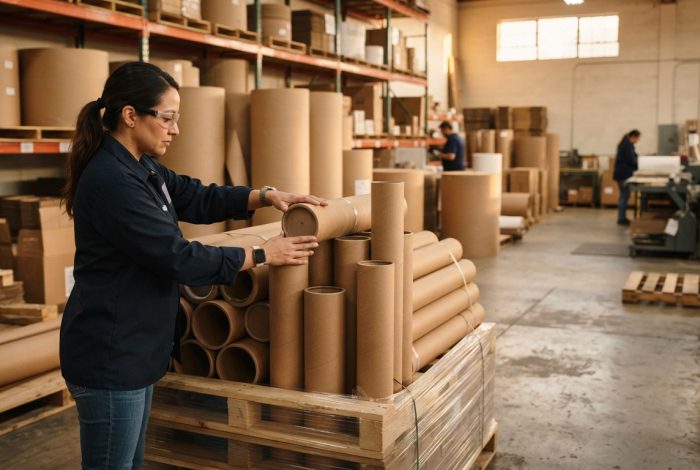
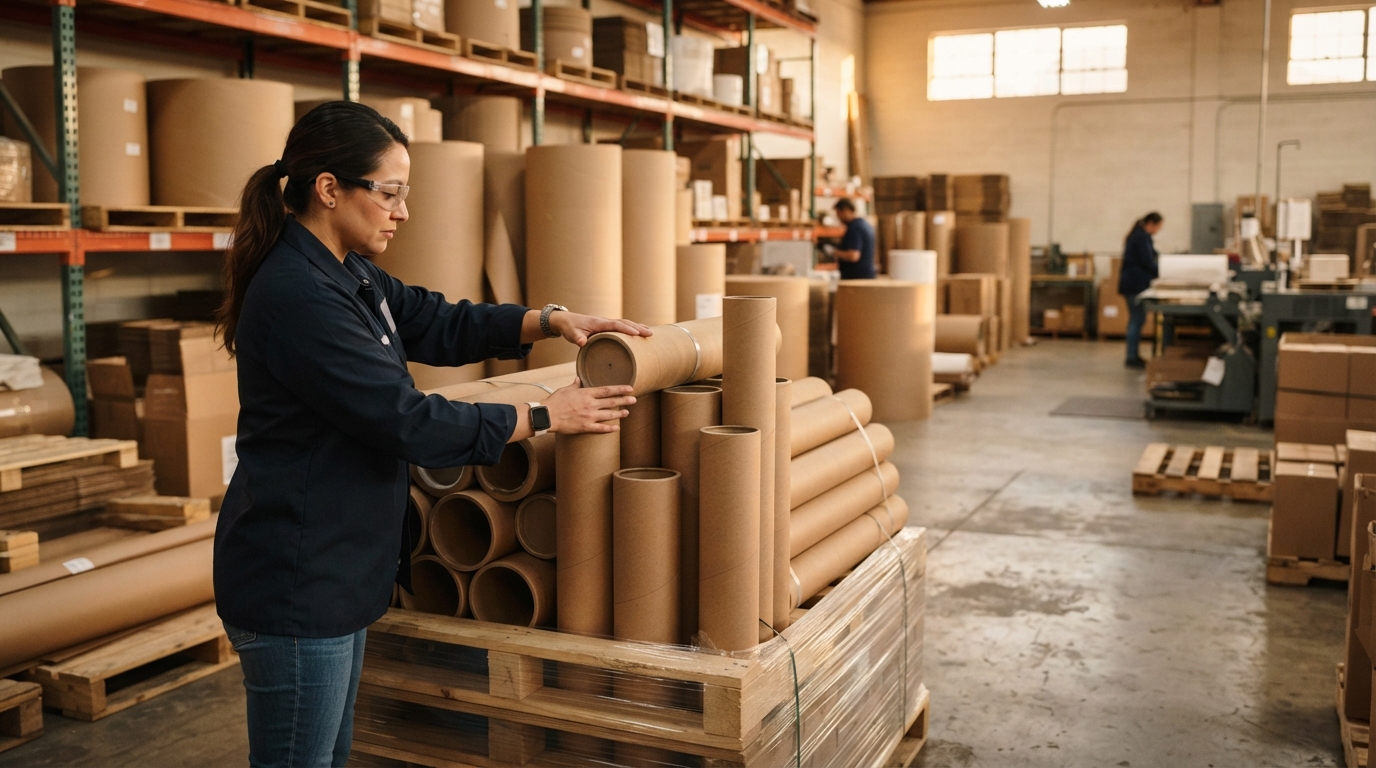
Takeaway:
- Cardboard shipping tubes use layered, spiral-wound paperboard walls to cushion long or rolled items against impact, bending, and crushing during transit.
- Wall thickness, end caps, and corrosion-inhibiting liners are the main variables that determine how much protection a tube provides.
- Matching tube diameter and wall strength to the item’s weight and shape reduces the risk of damage claims during shipping.
Cardboard shipping tubes protect fragile or awkwardly shaped items by distributing impact force across a rigid, cylindrical wall structure rather than concentrating stress at a single point, as flat boxes often do with long objects. This shape makes them a practical choice for anything that rolls, bends, or extends beyond standard carton dimensions.
Spiral-wound construction is what gives these tubes their strength. Paper tubes consist of paper or paperboard sheet layers wound together to form strong, hollow, and usually cylindrical shapes, with the paper layers laminated or bonded together using adhesives. That layered winding process is central to how Cardboard Shipping Tubes by Callenor are engineered to resist crushing and flexing along the length of the tube, which matters most when items travel through multiple handling points before reaching their destination.
Why Tube Shape Outperforms Boxes for Certain Items
A rectangular box relies on corner strength, which weakens quickly when the contents are long, round, or unevenly distributed. A cylindrical tube spreads pressure evenly around its circumference instead.
- Rolled artwork, blueprints, and posters avoid creasing because there are no flat panels to buckle.
- Metal bars, rods, and poles sit inside a rigid sleeve that resists bending under their own weight.
- Items with irregular cross-sections, such as reels or coiled materials, fit more securely than in a boxed void filled with loose packing material.
A shipping tube, mailing tube, or cardboard tube is a shipping container used to ship long items, usually a long package with a narrow cross-section: square, triangle, or round. This design has been used in commercial shipping for over a century, with convolute drums wound from kraft paper seeing widespread use in World War II as a durable packaging format for industrial goods.
Wall Thickness and Construction Matter More Than Size
Not every tube offers the same level of protection. Wall thickness, the number of paperboard plies, and the type of adhesive bonding all affect how much force a tube can absorb before it deforms.
|
Tube Type |
Typical Use |
Protection Level |
|
Light-duty single-wall |
Posters, rolled artwork, documents |
Basic crush resistance |
|
Heavy-duty multi-wall |
Steel bars, rods, poles |
High crush and bend resistance |
|
VCI-lined tube |
Bare metal parts prone to oxidation |
Corrosion protection plus structural strength |
Longer and heavier tubes are usually made of stronger grades of corrugated board, sometimes double wall, which allows manufacturers to scale wall strength to the weight of the contents rather than relying on a single universal thickness. For items such as steel bars or rods, a liner with vapor corrosion inhibitor (VCI) properties adds protection against rust and moisture damage that standard cardboard alone cannot prevent.
End Caps, Closures, and Final Protection Details
The tube body only does half the job. End closures determine whether contents stay fixed in place or shift during transit, which is often where damage actually occurs.
1. Plastic or metal plugs seal the ends and resist crushing from stacked pallets.
2. Pressure-sensitive tape secures telescoping sections on tubes designed to extend or retract.
3. Wood end caps add rigidity for heavier industrial loads shipped over long distances.
The open ends may have plastic caps or plugs, and pressure sensitive tape can seal tubes, with some paper tubes having two sections which slide to telescope closed. Buyers across the USA sourcing tubes for fragile or high-value shipments typically specify both wall grade and end-cap type together, since a strong tube body paired with a weak closure still leaves contents vulnerable at the point of greatest handling stress.
Frequently Asked Questions
What items are best suited for cardboard shipping tubes? Long, rolled, or cylindrical items such as posters, blueprints, metal rods, and bars benefit most, since the tube shape matches their geometry and avoids the creasing or bending risk common with flat boxes.
Do shipping tubes protect against moisture and corrosion? Standard cardboard tubes resist physical impact but not moisture on their own; tubes with a vapor corrosion inhibitor (VCI) liner add a layer of chemical protection specifically for bare metal items.
How is tube strength determined? Strength comes from the number of paperboard plies, the wall thickness, and the wind pattern used during manufacturing, with heavier-duty applications requiring thicker, multi-wall construction.
Are cardboard tubes recyclable? Paperboard tubes are generally recyclable where paper recycling programs accept tubular cardboard, though recipients should check local guidelines since some facilities handle round items differently than flat cardboard.
Looking for cardboard shipping tubes that provide dependable protection for fragile, rolled, or long items? Callenor Company, Inc. offers paper tube solutions for packaging and shipping applications, with options to suit different product dimensions and protection requirements. Explore the available tube products and contact Callenor to discuss the right specifications for your packaging needs. Visit Callenor Company, Inc. on Google Maps for business details and contact information.