Key takeaway:
- Fit, fabric, and color are the three factors that most affect how a wedding suit performs on photographs and through a full day of wear.
- Season, venue formality, and the wedding party’s color scheme should guide fabric weight and shade selection.
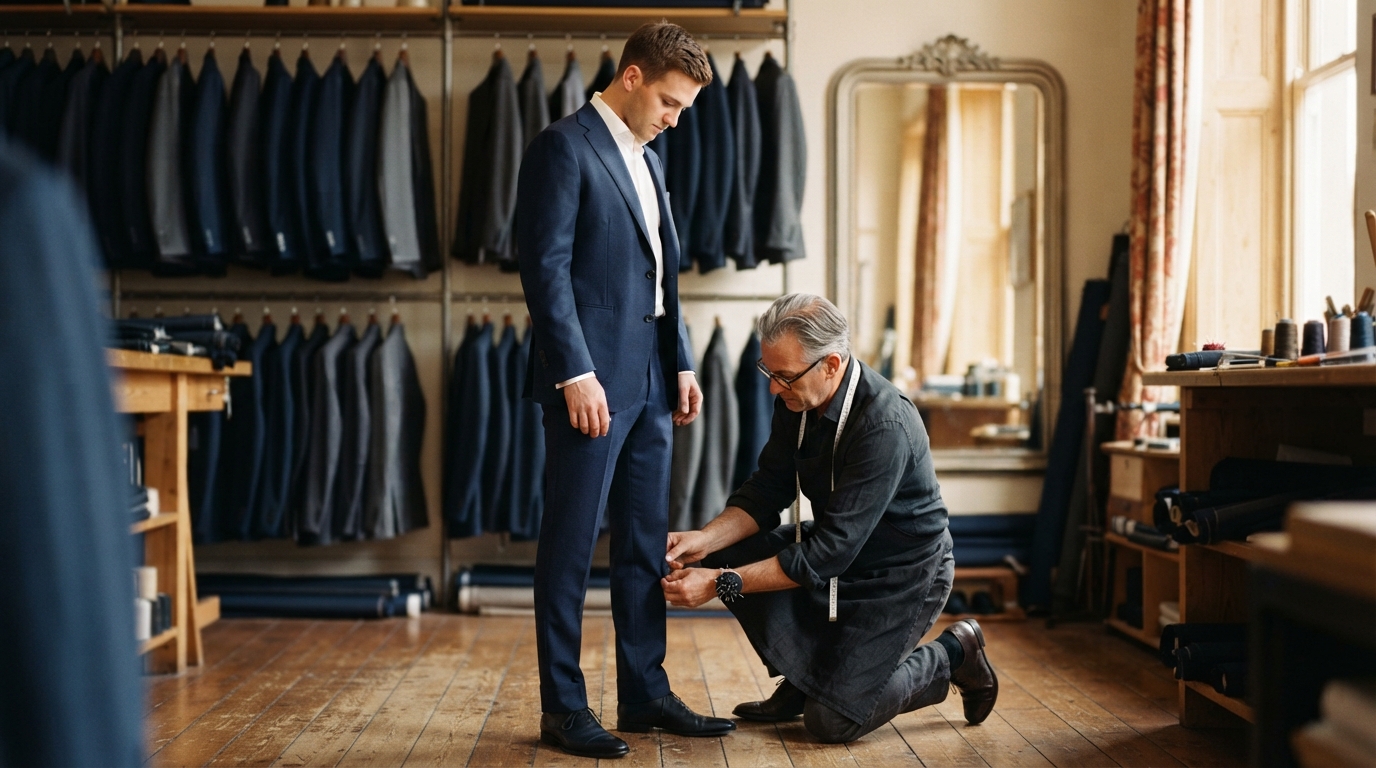
- Scheduling a fitting several weeks ahead of the event date allows time for tailoring adjustments.
Choosing the right men’s wedding suit comes down to matching fit, fabric, and color to the wedding’s season, venue, and formality level. A suit that fits the body’s proportions and suits the setting will photograph well and hold up through a full day of standing, dancing, and travel.
Anyone researching a men’s wedding suit for an upcoming ceremony will find that the decision involves more than picking a color. Fit through the shoulders and waist, fabric weight suited to the season, and coordination with the wedding party’s palette all factor into how the finished look reads in person and in photographs. Getting these details right typically requires professional measurements rather than relying on standard off-the-rack sizing.
Fit and Construction Basics
A well-fitted suit jacket sits flat across the shoulders without pulling or bunching at the back. Sleeve length should expose roughly a quarter to half inch of shirt cuff, and trousers should break cleanly at the shoe without excessive bunching.
Common fit issues to check before the wedding day:
- Jacket shoulders that extend past the natural shoulder line
- Trouser rise that sits too low or too high on the waist
- Sleeve length that hides the shirt cuff entirely
- Lapel width disproportionate to body frame
Tailoring adjustments for these issues generally take one to two fittings, so starting the process early reduces last-minute stress.
Fabric and Seasonal Considerations
Fabric weight affects comfort as much as appearance, particularly for outdoor or warm-weather ceremonies common in the mid-Atlantic region. Lighter wool blends and linen-cotton mixes breathe better in humid conditions, while heavier wool suits hold their shape better in cooler months.
| Fabric Type | Best Season | Comfort Level |
| Lightweight wool | Spring/Summer | High breathability |
| Linen-cotton blend | Summer | High breathability, wrinkles easily |
| Mid-weight wool | Fall | Balanced warmth and comfort |
| Heavier wool/tweed | Winter | Warm, less breathable |
Couples planning ceremonies in Hanover, VA should weigh local seasonal humidity and temperature swings when selecting fabric weight, since outdoor venues in the area can shift markedly between spring and late summer dates. The National Weather Service publishes regional climate data that can help with planning outdoor events around seasonal temperature and humidity patterns.
Color Coordination and Formality Level
Suit color should align with the wedding’s formality and the broader color scheme chosen by the couple. Navy and charcoal remain versatile choices that work across most venues and seasons, while lighter shades like tan or light gray suit daytime or garden ceremonies.
Formality cues to consider:
- Black-tie events call for tuxedos rather than standard suits.
- Semi-formal evening weddings often favor dark navy or charcoal.
- Daytime or outdoor ceremonies allow more flexibility with lighter colors and textures.
- Rustic or barn venues often pair well with tweed or textured fabrics.
Matching the groom’s suit tone to the wedding party’s attire, rather than requiring an exact match, generally produces a more cohesive look in photographs.
Business Info
Based in Williamsburg, VA, Find Your Wedding Suit serves individuals planning weddings across Hanover, VA, offering fitting services for formalwear selection.
Frequently Asked Questions
How far in advance should a wedding suit be fitted? Most tailoring professionals recommend starting fittings at least six to eight weeks before the wedding date to allow time for alterations and a final fitting closer to the event.
What fabric works best for an outdoor summer wedding? Lightweight wool or linen-cotton blends tend to perform better in warm, humid conditions than heavier wool fabrics, which can feel restrictive during outdoor ceremonies.
Should groomsmen match the groom’s suit exactly? Groomsmen’s suits are often coordinated in a complementary tone rather than an identical match, which helps distinguish the groom while maintaining visual cohesion in photographs.
What is the most common fit mistake to avoid? Oversized shoulders and sleeves that fully cover the shirt cuff are among the most frequent fit issues, both of which are correctable through professional tailoring.
Final Notes
Selecting a wedding suit involves balancing fit, fabric, and color against the specific demands of the ceremony’s season and venue. Readers can Find Your Wedding Suit for published location and contact details.