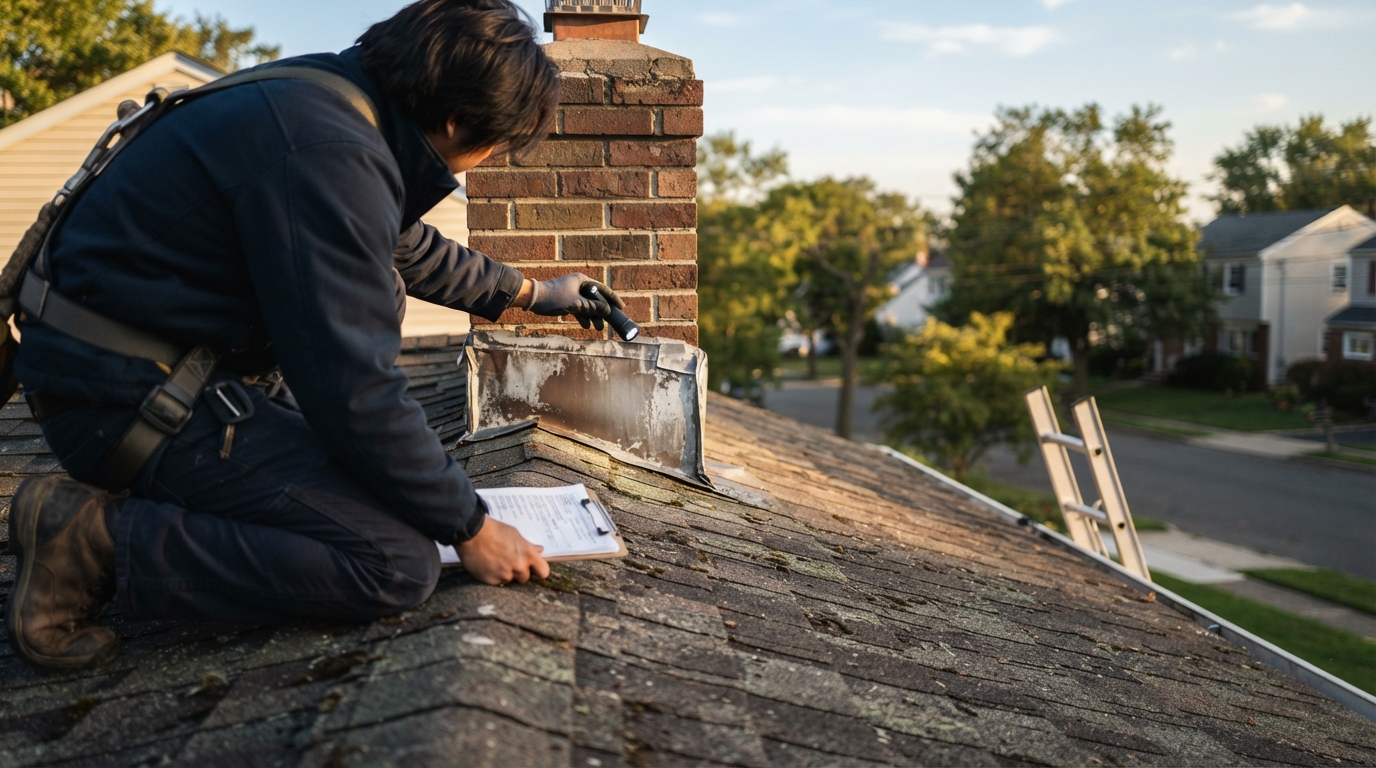
• Sagging rooflines, granular shingle loss, and attic water stains are the clearest signals a Harrison, NY roof needs a professional look.
• Seasonal weather swings in the Hudson Valley accelerate wear on flashing, gutters, and shingles, making early detection important.
• A trained inspector can distinguish cosmetic aging from structural risk before small issues turn into costly repairs.
If your roof shows granular shingle loss, sagging, algae growth, or water stains on ceilings, it is time to schedule a professional roof inspection. These are the most common warning signs homeowners notice before larger structural or moisture problems set in.
A roof inspection Harrison NY homeowners request typically starts with a visual assessment of shingles, flashing, and attic ventilation, followed by a written summary of findings. Catching problems at this stage often costs far less than waiting for a leak to appear inside the home. Local contractors familiar with the area’s mix of older colonial-style roofs and newer builds can spot issues that an untrained eye might miss.
Visible Warning Signs That Signal a Problem
Roofs rarely fail without warning. Harrison homeowners can watch for several physical indicators before calling in a professional.
• Missing or curling shingles, along with granular loss that exposes the underlying material
• Algae or moss patches, which often point to trapped moisture or poor runoff
• A visibly sagging roofline, which can indicate age-related deck weakness or structural strain
• Blistered or raised shingles caused by impact damage or poor attic airflow
• Water stains or active leaks on ceilings and interior walls
According to the Houzz professional directory for the company, roof inspection is listed alongside services such as roof cleaning, roof flashing repair, and roof waterproofing as part of the standard offering. That range matters because an inspection often uncovers more than one issue at a time, from flashing gaps to ventilation problems.
Why Timing Matters in the Hudson Valley Climate
Weather patterns in Westchester County put extra stress on roofing systems throughout the year. Freeze-thaw cycles in winter, heavy spring rain, and summer heat all contribute to material fatigue over time. The National Oceanic and Atmospheric Administration tracks regional precipitation and storm trends that directly affect roof durability in the Northeast, and homeowners can reference NOAA’s climate data for the Northeast region to understand how seasonal shifts influence maintenance timing.
Inspecting a roof before winter and again after major storms helps catch small vulnerabilities before ice or heavy rain finds them. Attic checks are especially useful since shingle blisters can be due to impact damage or improper air circulation in your attic, a detail that is easy to overlook from ground level.
DIY Checks vs Professional Inspection
Many homeowners try to assess roof condition themselves before deciding whether to call a contractor. The table below outlines where each approach falls short or succeeds.
|
Assessment Method |
What It Can Catch |
What It Misses |
|
Ground-level visual check |
Obvious sagging, missing shingles, debris buildup |
Flashing gaps, attic moisture, hidden rot |
|
Homeowner attic inspection |
Daylight through the roof deck, insulation gaps |
Structural deck damage, subtle leaks |
|
Professional roof inspection |
Full shingle, flashing, ventilation, and structural review |
Limited only by roof accessibility |
A professional visit typically includes a walk of the roof surface, an attic check, and a review of flashing points around chimneys and vents. A sagging roof usually results from age, but regardless of the cause it needs to be inspected by a roofing contractor rather than assumed to be a minor cosmetic issue.
What Happens After the Inspection
Once an inspection is complete, homeowners should receive a clear explanation of findings rather than vague recommendations. A trustworthy process includes:
1. A written or photographed summary of shingle, flashing, and structural condition
2. A discussion of repair versus replacement options based on roof age and material
3. A cost estimate that separates urgent repairs from optional maintenance
4. A timeline for follow-up if monitoring is recommended instead of immediate work
This structured approach helps homeowners make decisions based on facts rather than pressure. Roofing materials also factor into how issues develop over time; for example, slate roofing is durable but heavier, and a more expensive option that requires the roof framing to be able to withstand the extra weight, which is the kind of detail an inspection should flag if it applies to a specific home.
Frequently Asked Questions
How often should a Harrison homeowner schedule a roof inspection? Most roofing professionals recommend an inspection at least once a year, with additional checks after major storms or high wind events.
Can a roof look fine from the ground but still have problems? Yes. Flashing gaps, attic moisture, and early shingle wear are often invisible from street level and only show up during a close-up or attic inspection.
Does roof age affect how often inspections are needed? Older roofs generally need more frequent monitoring since materials naturally lose flexibility and protective granules over time.
What should be included in a written inspection report? A thorough report should document shingle condition, flashing integrity, attic ventilation, and any signs of moisture, along with clear next-step recommendations.
Homeowners who notice any of the warning signs above should not wait for a small issue to become a larger repair. Expert Roofing of Westchester has served Westchester County homeowners for more than 20 years, and scheduling a timely inspection remains one of the simplest ways to protect a home’s long-term value.