Key takeaway:
- Organize gear by weight and frequency of use to keep an RV balanced and road-ready.
- Pack a dedicated safety kit covering fire, first aid, and tire emergencies before departure.
- Check local weather and waterway conditions in Escambia County before finalizing a camping route.
Packing for a trip involves more than loading supplies into available space; weight distribution, fire safety, and emergency preparedness directly affect how an RV handles on the road and how safely a campsite functions. A well-organized RV Camping checklist reduces breakdowns, accidents, and last-minute scrambling once a traveler reaches the campground.
Residents across Escambia County planning a weekend or extended trip benefit from a system that separates essentials from extras and prioritizes items that affect vehicle stability and occupant safety. The sections below outline a practical approach to packing, storage, and on-site precautions.
Organizing Gear by Weight and Function
Uneven weight distribution is one of the most common causes of handling problems in towable and motorized units. Heavy items placed too far forward, backward, or to one side can affect braking and cornering stability.
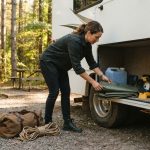
- Store heavier items such as tools, water containers, and canned goods low and centered over the axle.
- Keep frequently used items like cookware and bedding in easily accessible cabinets near the living area.
- Secure loose items in drawers or bins with non-slip liners to prevent shifting during transit.
- Distribute weight evenly side to side, not just front to back, to maintain balanced handling.
Separating gear into categories, kitchen, bedding, tools, and recreation, makes loading faster and helps travelers notice immediately if something is missing before departure.
Building a Safety-First Supply Kit
A dedicated safety kit should be treated as non-negotiable cargo, not an afterthought packed alongside recreational gear. The following items address the most frequent on-the-road and campsite incidents.
| Safety Category | Recommended Items | Why It Matters |
| Fire Safety | Fire extinguisher, smoke detector check, propane leak detector | Propane and electrical systems carry fire risk in enclosed spaces |
| First Aid | Bandages, antiseptic, medications, emergency contact list | Campgrounds may be distant from medical facilities |
| Tire and Roadside | Spare tire, jack, tire pressure gauge, reflective triangles | Tire failure is a leading cause of RV roadside incidents |
| Weather Readiness | Flashlight, battery radio, extra water, tarp | Sudden weather shifts can affect exposed campsites |
Testing smoke and carbon monoxide detectors before every trip, rather than assuming they still function from the last outing, closes a common safety gap. Propane-powered appliances in particular require periodic inspection of connections and seals.
Preparing for Local Conditions in Escambia County
Travelers heading to wooded or waterside campsites around Escambia County should account for regional weather patterns, especially during storm season. The National Weather Service publishes current forecasts and advisories that campers can check before and during a trip to avoid departing into developing severe weather.
Humidity and sudden rainfall are common considerations for outdoor stays in this region, which affects both gear choices and campsite setup.
- Pack moisture-resistant storage bags for electronics and paper documents.
- Bring extra rope or stakes rated for wind, since loose awnings and canopies are vulnerable in gusty conditions.
- Keep a battery-powered weather radio on hand in areas with limited cell coverage.
- Check waterway or lake conditions in advance if the trip includes canoeing or paddling activities.
Travelers operating near rivers or canoe launch points should also confirm water levels have not risen sharply after recent rainfall, since currents can change quickly in regional waterways.
Frequently Asked Questions
What is the most overlooked safety item when packing an RV? Working smoke and propane leak detectors are frequently overlooked because travelers assume previous trips confirmed they function properly. Testing both before departure, rather than relying on memory, prevents a basic but serious gap.
How should weight be distributed inside an RV? Heavier items belong low and centered near the axle, with frequently used gear stored within easy reach. Uneven side-to-side weight can affect handling as much as front-to-back imbalance.
Are weather checks necessary for short local trips? Yes. Even short trips within Escambia County benefit from checking current forecasts, since storms can develop quickly in this region and affect both driving conditions and outdoor campsite safety.
What should a basic first aid kit include for RV travel? A functional kit includes bandages, antiseptic, any personal medications, and a written list of emergency contacts, since campgrounds are often located some distance from the nearest medical facility.
Planning the Next Trip
Based in Holt, FL, Blackwater Joe’s: Canoes Cabins Camping serves customers across Escambia County.
Readers can Contact Blackwater Joe’s: Canoes Cabins Camping for published location and contact details.