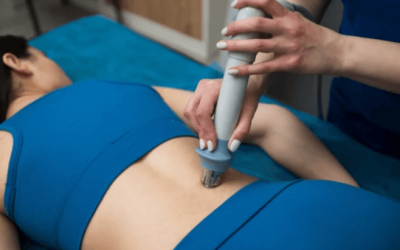
Spinal decompression may be considered for some people with disc-related lower back pain even when symptoms do not travel into the leg. Whether it is appropriate depends on the suspected source of pain, examination findings, overall health, and whether any conditions make traction unsuitable.
Sciatica is only one possible sign of a lumbar disc concern. Some people experience pain mainly in the center or on one side of the lower back without numbness, tingling, weakness, or radiating leg pain.
What Is Disc-Related Back Pain Without Sciatica?
Spinal discs are flexible structures located between the vertebrae. They help absorb force and allow the spine to bend, rotate, and move during daily activities.
Disc-related pain may develop when a disc becomes irritated or when its outer fibers are placed under repeated stress. The discomfort can remain near the lower spine rather than affecting a nearby nerve root.
Possible symptoms include:
- Deep or aching lower back pain
- Pain concentrated near the center of the spine
- Discomfort that is stronger on one side
- Increased pain after prolonged sitting
- Symptoms during bending or lifting
- Stiffness when changing positions
- Muscle tightness around the lower back
- Pain that improves when lying down
The absence of sciatica does not confirm or rule out a disc concern. Muscles, joints, ligaments, and other structures may create similar symptoms.
Why Do Some Disc Problems Cause Sciatica While Others Do Not?
Sciatica generally occurs when a lumbar nerve root becomes irritated or compressed. This can produce pain, tingling, numbness, or weakness that travels from the lower back into the buttock and leg.
A disc may be painful without directly affecting a nerve. The irritated area may remain within the disc or nearby spinal structures, resulting in localized lower back pain.
The direction and location of a disc change may also affect the symptom pattern. A disc that places pressure near a nerve may cause radiating symptoms, while irritation located farther from the nerve may produce pain mainly in the back.
Symptoms may also change over time. Someone who begins with localized pain could later develop leg symptoms, while another person may never experience sciatica.
How Is the Source of Lower Back Pain Evaluated?
An evaluation generally begins with questions about when the discomfort started, where it is located, and which positions make it better or worse.
A healthcare provider may assess:
- Spinal range of motion
- Posture and walking patterns
- Muscle strength
- Sensation and reflexes
- Hip and pelvic movement
- Joint mobility
- Signs of nerve irritation
- Responses to sitting, bending, or standing
A back chiropractor may also consider previous injuries, work demands, exercise habits, and the amount of time spent sitting.
People searching for a chiropractor for lower back pain, neck adjustment services should understand that lower back and neck concerns require separate evaluations. Treatment should be based on the affected area and examination findings rather than applying the same approach throughout the spine.
Imaging is not automatically required for every episode of lower back pain. It may be recommended when symptoms follow significant trauma, continue to worsen, or are accompanied by neurological warning signs.
What Is Spinal Decompression?
Spinal decompression is a non-surgical treatment that uses a motorized table to apply controlled traction to selected areas of the spine. The force is gradually applied and released according to the person’s condition and tolerance.
The purpose is to gently reduce mechanical pressure affecting spinal structures. Treatment settings may vary based on the spinal level being addressed, symptom severity, body position, and response to care.
Spinal decompression should not be described as pulling a disc back into place. It is a conservative therapy intended to influence spinal loading and provide a controlled environment for movement.
Can Decompression Be Considered Without Leg Pain?
Yes, decompression may be considered in some cases where pain remains in the lower back. Sciatica is not required before a person can be evaluated for traction-based care.
A provider may consider decompression when symptoms appear related to spinal loading, disc irritation, or certain mechanical movement patterns. For example, pain that becomes worse after prolonged sitting or improves in supported positions may provide useful information during an assessment.
However, localized back pain can have many causes. Decompression may not be appropriate when discomfort is primarily related to a muscle strain, fracture, inflammatory condition, instability, or another health concern.
A personalized evaluation is therefore more important than the presence or absence of one symptom.
Can Chiropractic Care Be Used With Decompression?
Chiropractic care and decompression may sometimes be included in the same conservative care plan, but they serve different purposes.
Chiropractic therapy may address restricted joint movement, muscle guarding, posture, or movement patterns. Decompression focuses on controlled spinal traction.
A chiropractic adjustment may be considered when examination findings show that reduced joint mobility is contributing to discomfort. It should be selected according to the patient’s condition and should not be assumed appropriate for every case of disc-related pain.
A sports chiropractor may also evaluate how lower back symptoms affect lifting, running, training, or recreational activities. The assessment may include hip mobility, trunk control, and movement mechanics that influence spinal loading.
Who May Not Be a Candidate for Decompression?
Spinal decompression is not suitable for everyone. A provider should review medical history and screen for conditions that may make traction inappropriate.
These may include certain fractures, severe instability, some bone conditions, pregnancy, recent spinal surgery, or other medical concerns. Individual circumstances vary, so treatment should not begin without an appropriate assessment.
The provider may recommend another type of care or referral when decompression is not a reasonable option.
When Does Lower Back Pain Need Prompt Medical Attention?
Seek prompt medical care when lower back pain occurs with:
- Loss of bladder or bowel control
- Numbness around the groin
- Rapidly worsening leg weakness
- Difficulty walking
- Fever or unexplained illness
- Severe pain after a major fall
- Unexplained weight loss
- Pain that becomes progressively worse
These symptoms may require medical assessment rather than routine conservative care.
Request a Lower Back Evaluation in Lone Tree, CO
Lower back pain does not need to extend into the leg before it deserves attention. Contact a qualified healthcare provider serving Lone Tree, CO, to determine whether spinal decompression, chiropractic care, or another conservative approach may be appropriate.